The AA
Optimising user journeys
Year
2018-2021
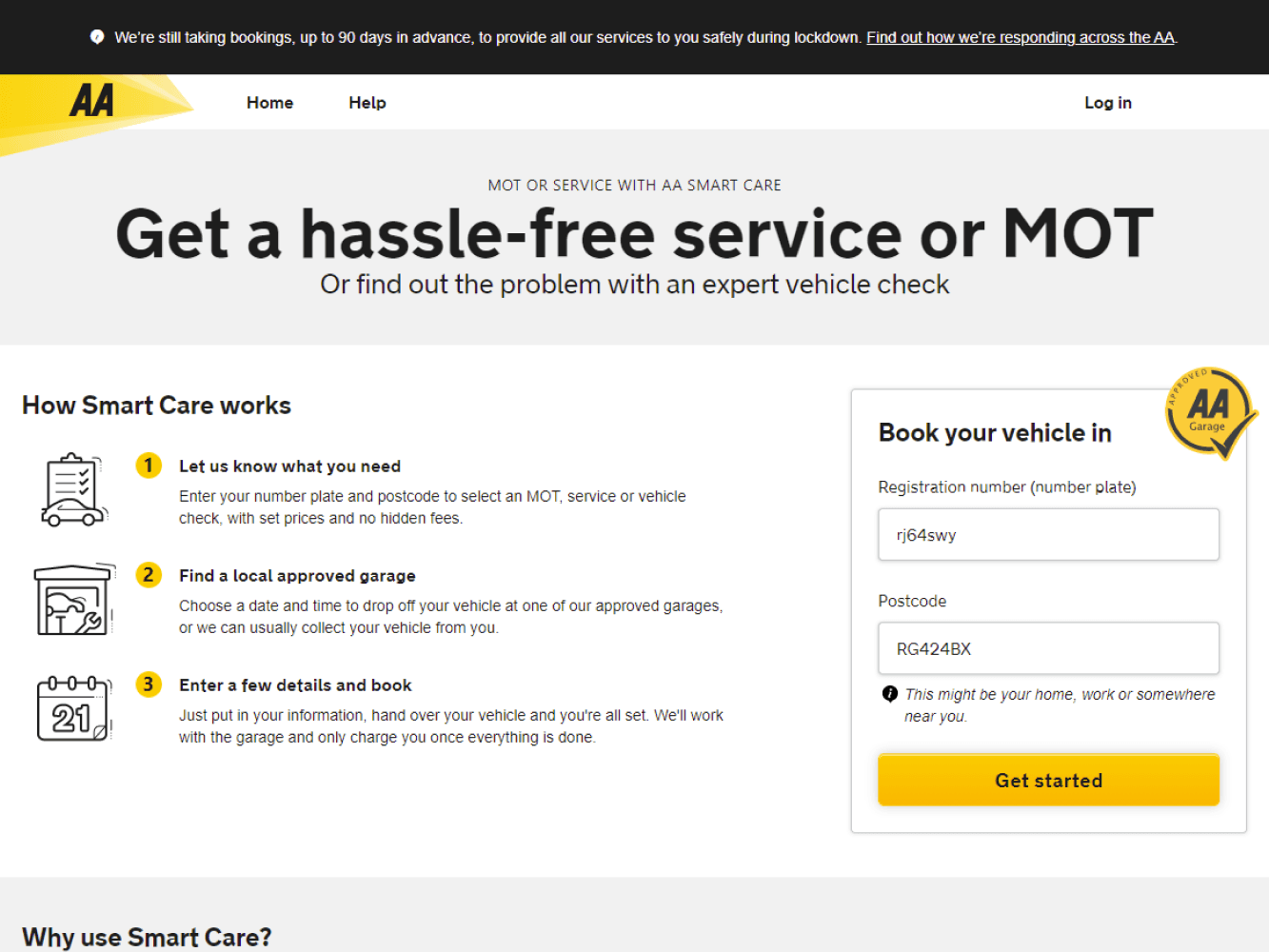
When I joined The AA in 2018, copy across the sales and support journeys was treated as a basic utility rather than a strategic asset. Collaborating alongside technical teams and established stakeholders, I championed a user-focused, research-driven approach. I challenged long-held internal assumptions about terminology and comprehension to create an inclusive experience that a much broader range of customers could easily navigate.
The core challenge was striking a precise editorial balance. I had to weave the warm, supportive tone dictated by the brand into the highly technical, compliance-driven reality of a heavily regulated industry. By successfully navigating this tension, I demonstrated the tangible business value of a truly user-centric content strategy.
What was the biggest problem?
Faced with an ageing membership and increasing digital competition from cut-price operators, The AA needed to maintain its historic market dominance. The strategic pivot focused on positioning the brand as a companion for every stage of a customer's driving story, moving beyond just emergency breakdown recovery to support drivers who see the road as an adventure.
A major part of this expansion was ongoing car maintenance. The company had a historic national network of partner garages, which they had leveraged into a trial B2B partnership that provided Uber drivers with tailored servicing and MOT packages, known as Smart Care. The business saw a huge opportunity to open this up to everyday, personal customers and integrate The AA into their yearly driving routine.
“The terminology was highly technical, written exclusively for people who already understood car mechanics.”
Because Smart Care originated in a strict B2B context, the initial digital experience was fundamentally limited and not well-positioned for a consumer launch. The terminology was highly technical, written exclusively for fleet operators and people who already understood car mechanics. This alienated the average driver, severely limiting the potential audience and creating a massive barrier to conversion.
Generating everyday buy-in
The solution was to rework the content for a consumer audience, which required understanding who that audience was. Part of the challenge was the stakeholders for the project had a decade or more of experience in this space, were very familiar with the terminology and had strong opinions about how the product should be explained.
To attempt to bring some more insight, I encouraged and contributed to user testing to get a sense of the customer journey as it exists, and the words existing customers used to understand the various features and options of the product. This included Hotjar heat maps (below), to show the specific areas of the page which resonated, and user tests to refine the copy used in the sales journey itself.
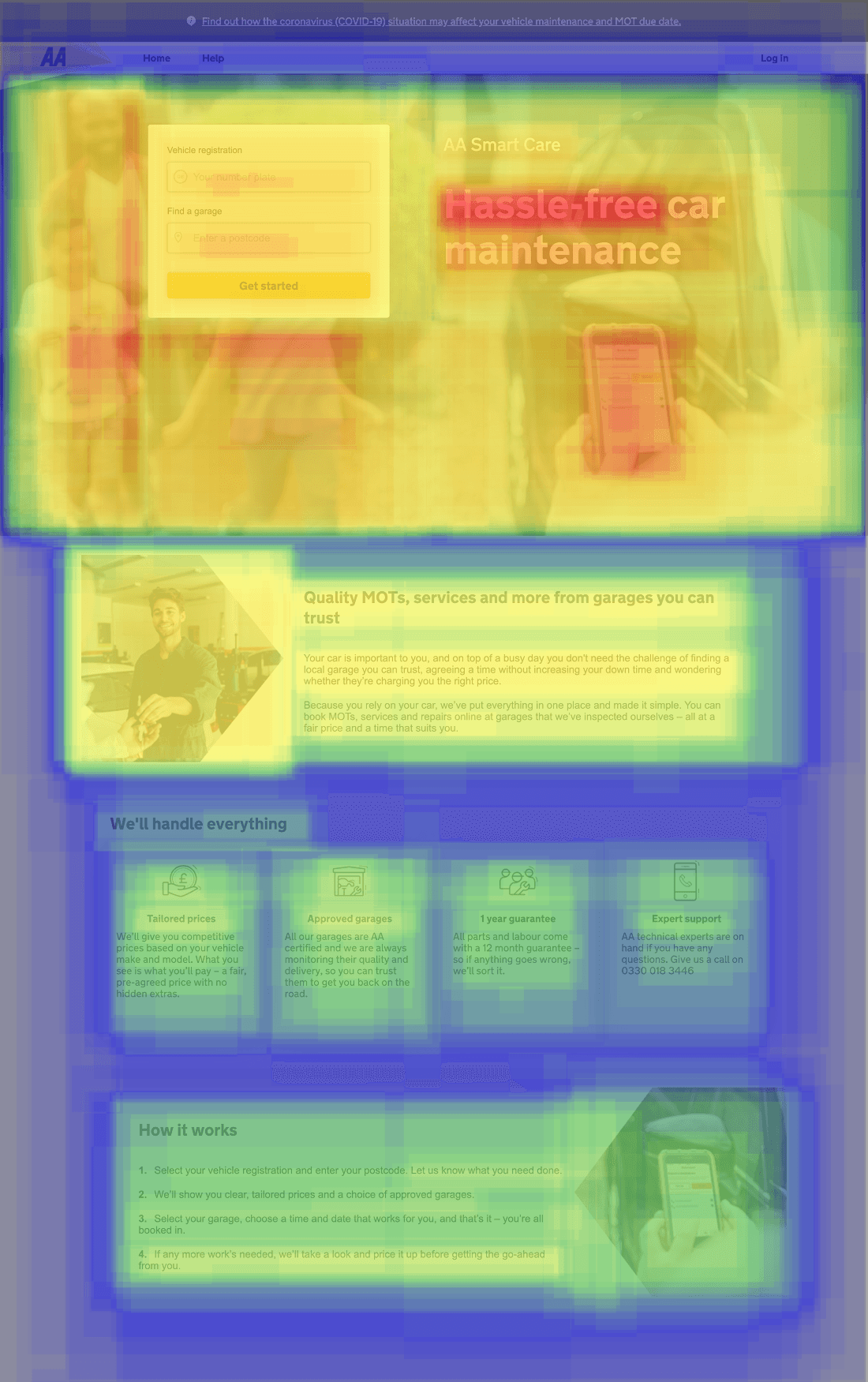
Desktop heat map
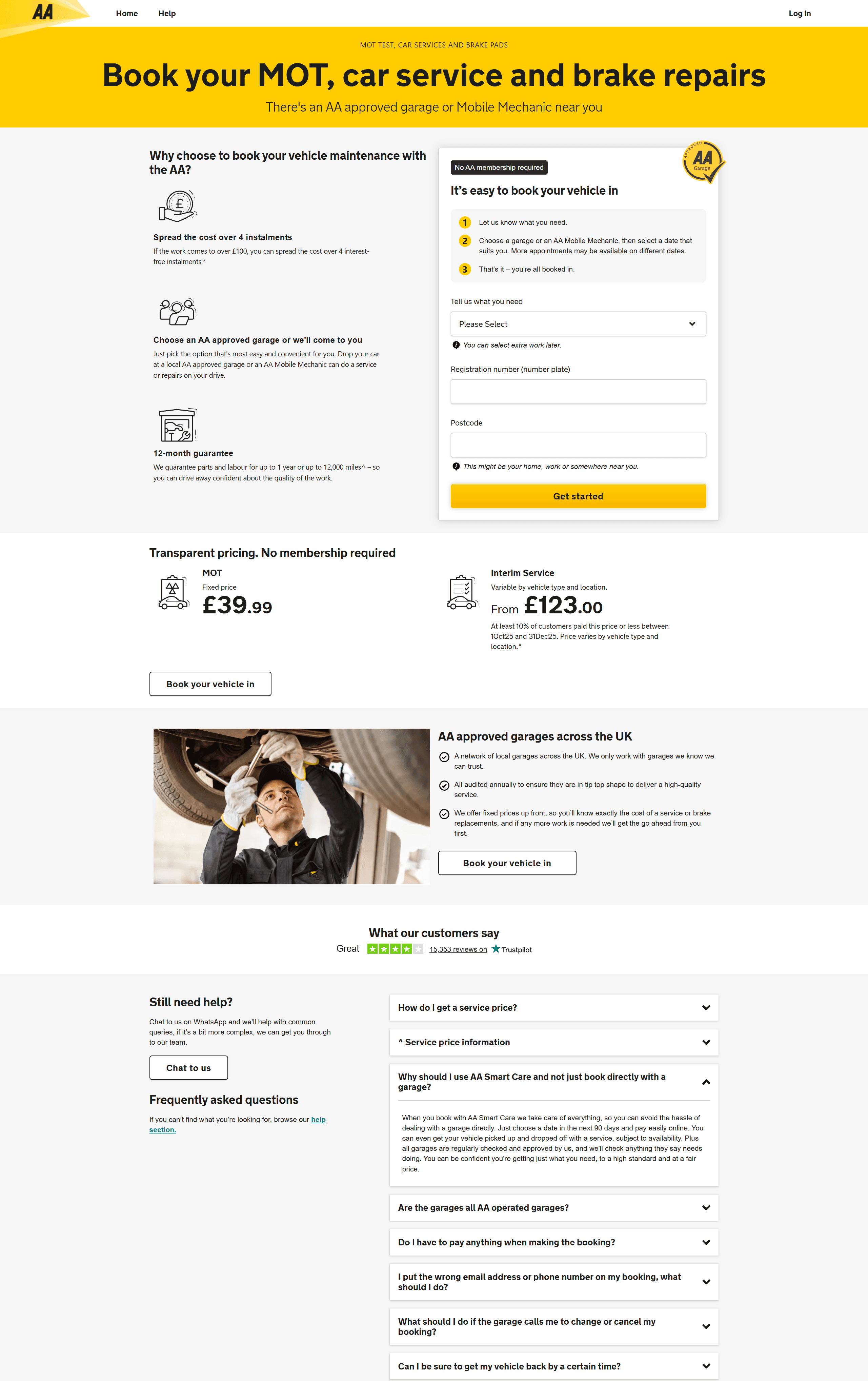
2026 Smart Care landing page
From the customer insights, it was clear the existing copy didn't inspire customers or answer the natural question consumers have when introduced to a new product: "so what?". Breaking down the heat map (above left) alone, it's clear the "hassle-free" element of the product is far more engaging to users than "car maintenance", and the legacy content gave few reasons to scroll down the page to find out more. Compare this to the highly approachable, benefit-led copy which persists today (above right).
The stakeholders knew the current approach wasn't working, so I successfully advocated for new copy focusing entirely on convenience. The key was extending the peace of mind The AA brand is famous for into the notoriously stressful experience of getting a vehicle serviced.
Following a significant rework of the copy and a strategic integration into the member benefits area to boost exposure, conversion for the service increased by 6% in under a year (inset). Furthermore, this project proved the tangible commercial value of user testing to the wider team, becoming a primary catalyst for the company investing more heavily in its research function going forward.
Working in controlled environments
The legacy B2B sales journey had not been updated for years and relied on vague product names like "Fleet" and "Specialist" breakdown cover. The approach assumed all buyers were large fleet management companies fluent in technical jargon, alienating many local taxi firms and individual operators who actually used the site. As a result, customers were constantly calling the contact centre after purchasing to change their cover type, or just for reassurance that they have met their business needs. In a highly regulated industry, this lack of upfront clarity is a fundamental compliance risk.
I restructured the sales journey to accurately reflect specific vehicle types and real-world use cases. Transitioning to descriptive names like "Car and Van" and "Taxi and Courier" cover provided an immediate boost to customer confidence for smaller operators. Crucially, I also restructured the sales steps to pull the exact cover details and caveats up front, ensuring users completely understood the product before the transaction took place.
Immediately after launch, we recorded a significant reduction in corrective contact centre calls and much more positive user sentiment in follow-up testing. While the journey was bound by strict regulatory controls, keeping the user at the centre allowed me to engineer an approachable, compliant narrative that persists as the core product naming structure today.
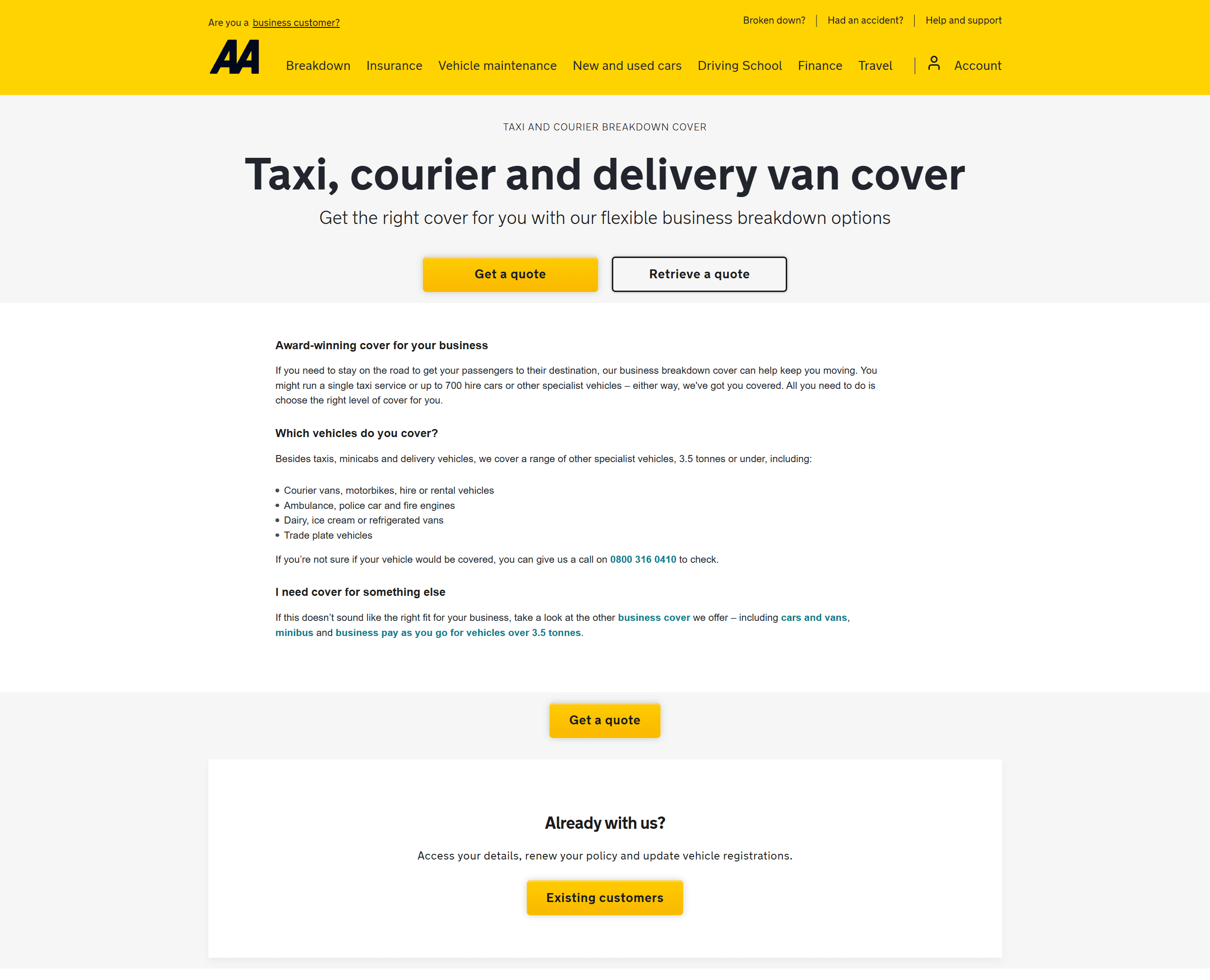
"Specialist" cover became "Taxi and Courier" cover
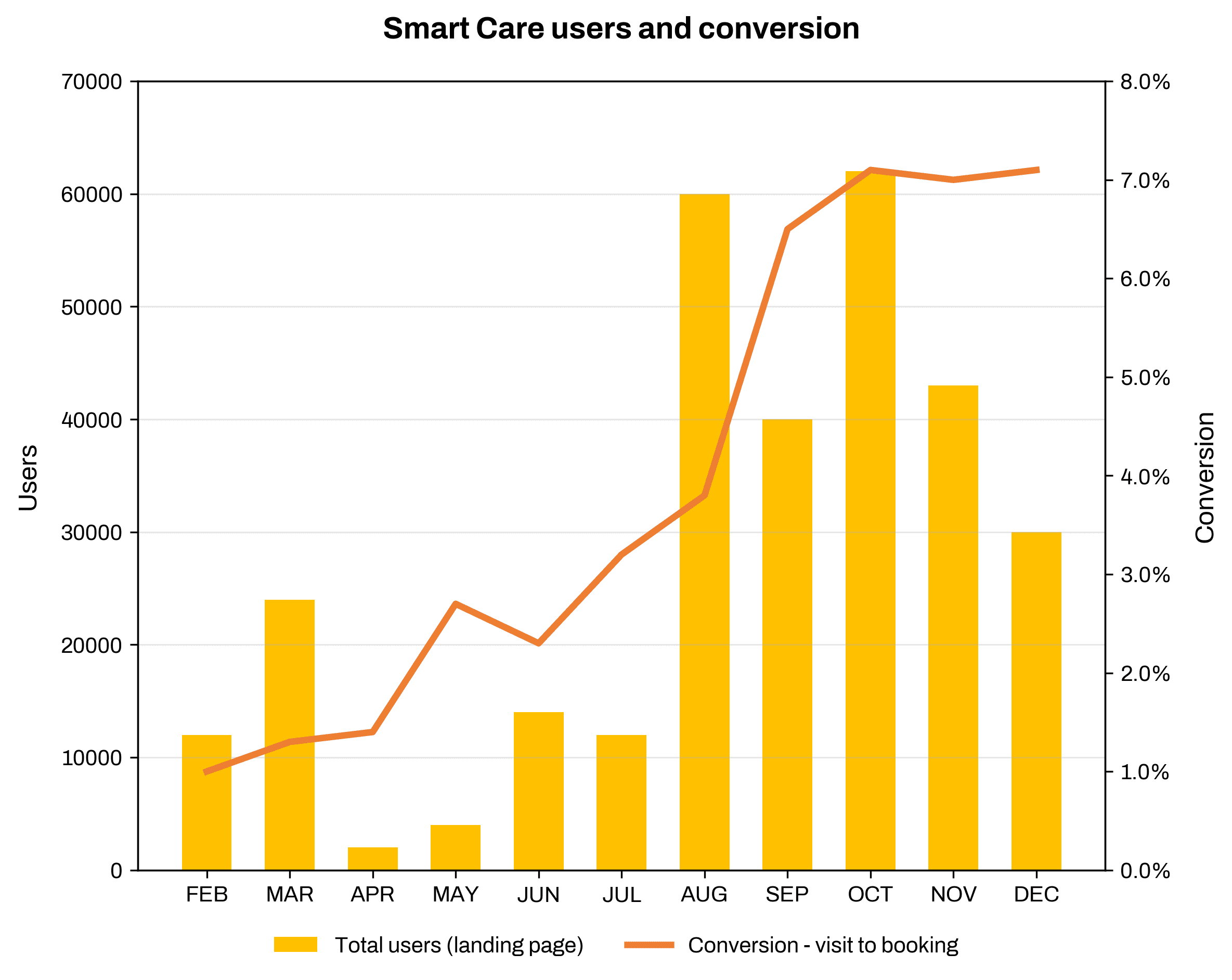
A graph showing a 6% increase in conversion
The user impact
In any company that has been operating since 1905, legacy digital infrastructure presents unique challenges, and The AA was no exception. When I joined the team, the friction in these aging digital journeys was becoming increasingly apparent to customers, which served as the catalyst for these core initiatives.
“Championing research and user testing provided the exact insights needed to find the right terminology.”
By consistently putting the user first, I supported the structural transformation of the online experience across both web and mobile platforms. This approach delivered a lasting impact on the overall user experience and drove measurable improvements in key business metrics, including a distinct increase in conversion (inset).
Championing research and user testing provided the exact insights needed to find the right terminology. By implementing those insights consistently across all channels while strictly adhering to complex legal and compliance requirements, I engineered a fundamentally smoother user journey. Ultimately, this work went further than just adjusting copy; it built a cohesive, user-centric system that brought a historic brand firmly into the modern digital era.