Quantexa
Establishing Content Design
Year
2021-2026
When I joined Quantexa in 2021, there was no Content Design function. I spent time defining what Content Design meant at the company, establishing core design principles, collaborative processes and building relationships with the wider business.
As the discipline became more embedded I was able to take on more ambitious technical projects. Rather than simply identifying insights and recommendations, I built automated systems and investigated the codebase to make more fundamental, structural changes, all in pursuit of a frictionless experience for users.
What was the biggest problem?
The primary focus of the team was the Quantexa documentation site, an Antora-built, Asciidoc ecosystem containing 4,000 pages, up to 80 versions, and 20 individual site components. There was little understanding of the audience, no established analytics metrics, user stories, or personas, and the content distribution was very rigid, siloed, and disconnected.
“…addressing the problem needed not only restructuring, but to exceed users' expectations…”
Site search and content discoverability were poor, and the overall understandability was low due to the dense subject matter and the organisation of vast swathes of technical information. Addressing this problem required not only restructuring but establishing clear goals to meet and exceed user expectations of the experience a documentation site can deliver.
My approach
Rather than immediately proposing structural changes, I recognised the importance of understanding and mapping the existing ecosystem. As well as getting into the technical detail and jargon of the product itself, I set up foundational tools such as Google Analytics to build the foundation for future insights. Realising that quantitative data alone couldn't give a full picture of the journey, I developed an annual qualitative user testing framework.
The insights from this testing highlighted three critical areas of friction which created barriers for users: adaptability, discoverability, and approachability. These themes became the strategic pillars of the Content Design function. By balancing massive infrastructure overhauls with rapid, tangible improvements, like designing a graphical feature overview for new release pages (inset), I continually pushed the user experience forward.
Here are three core initiatives I delivered to address these themes in more detail.
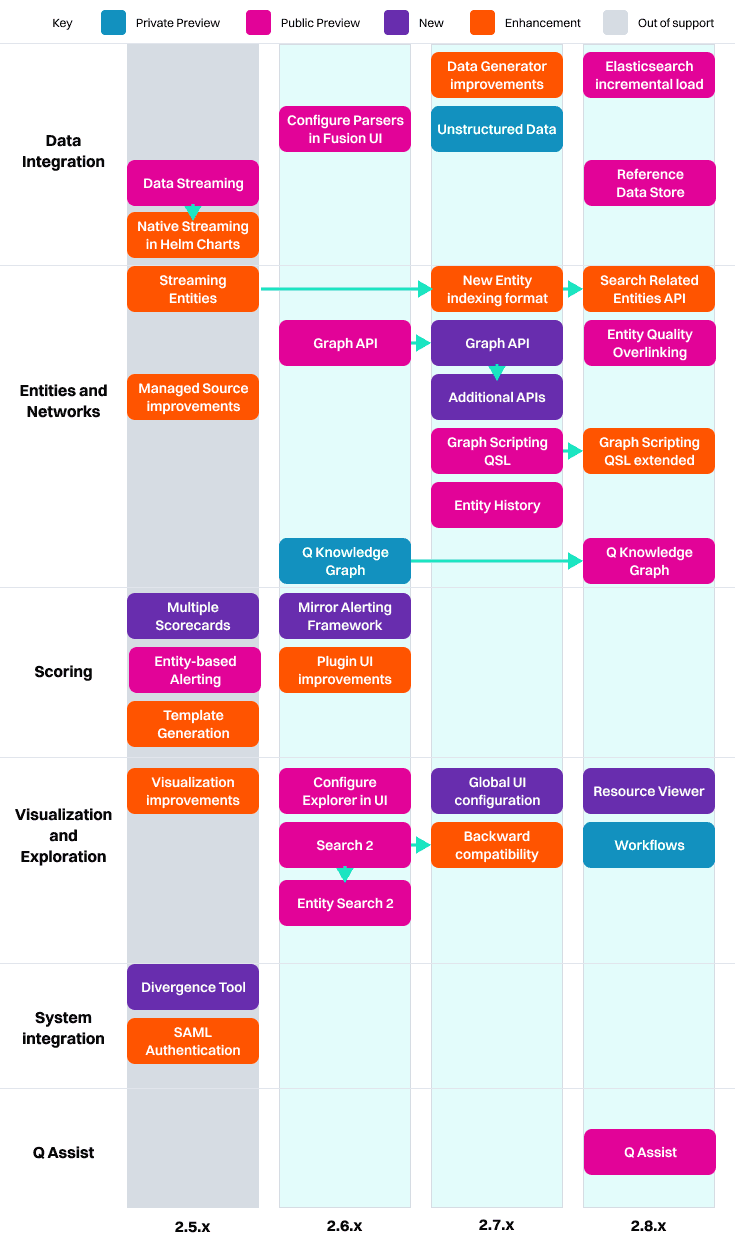
The approachable release features overview graphic
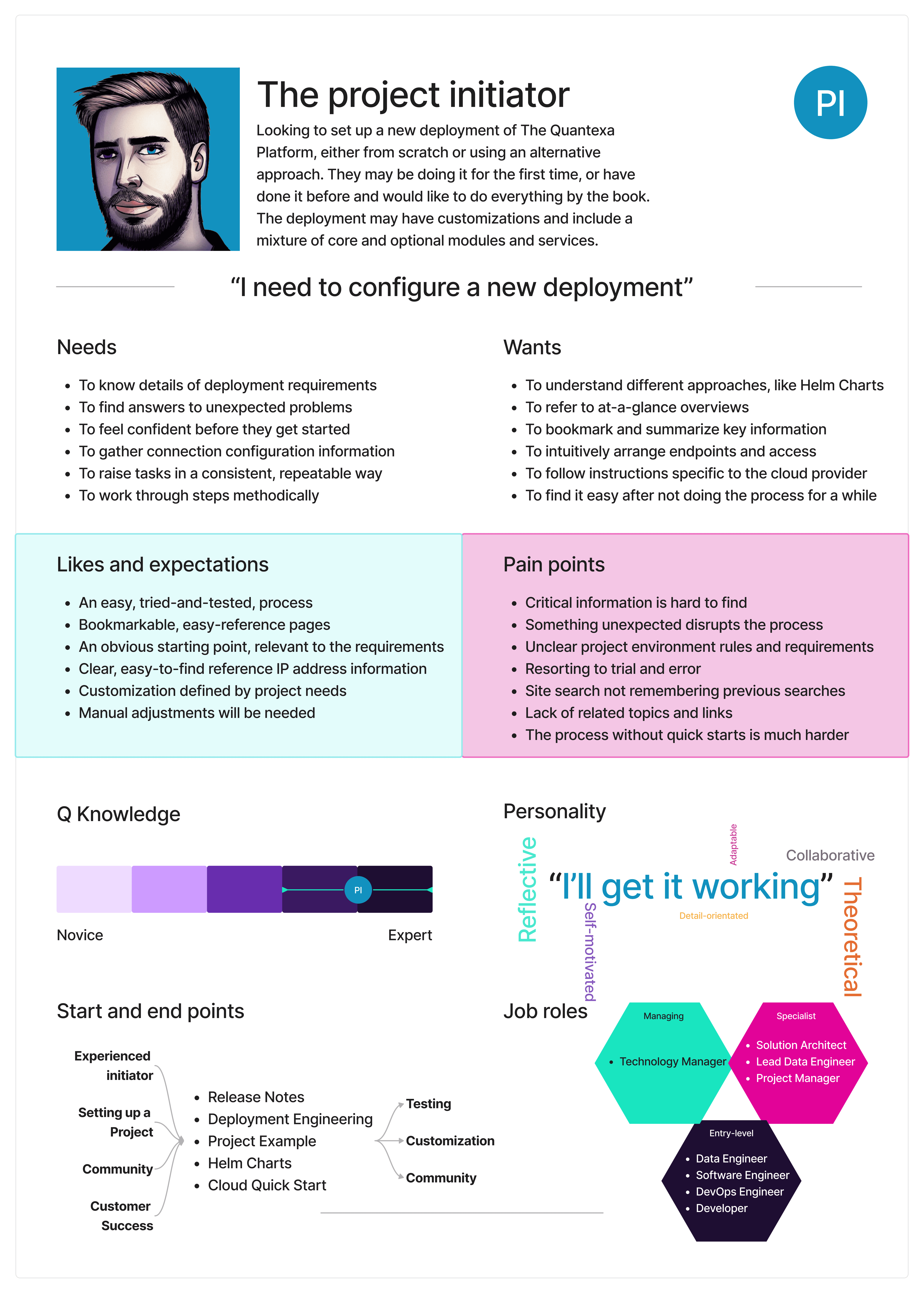
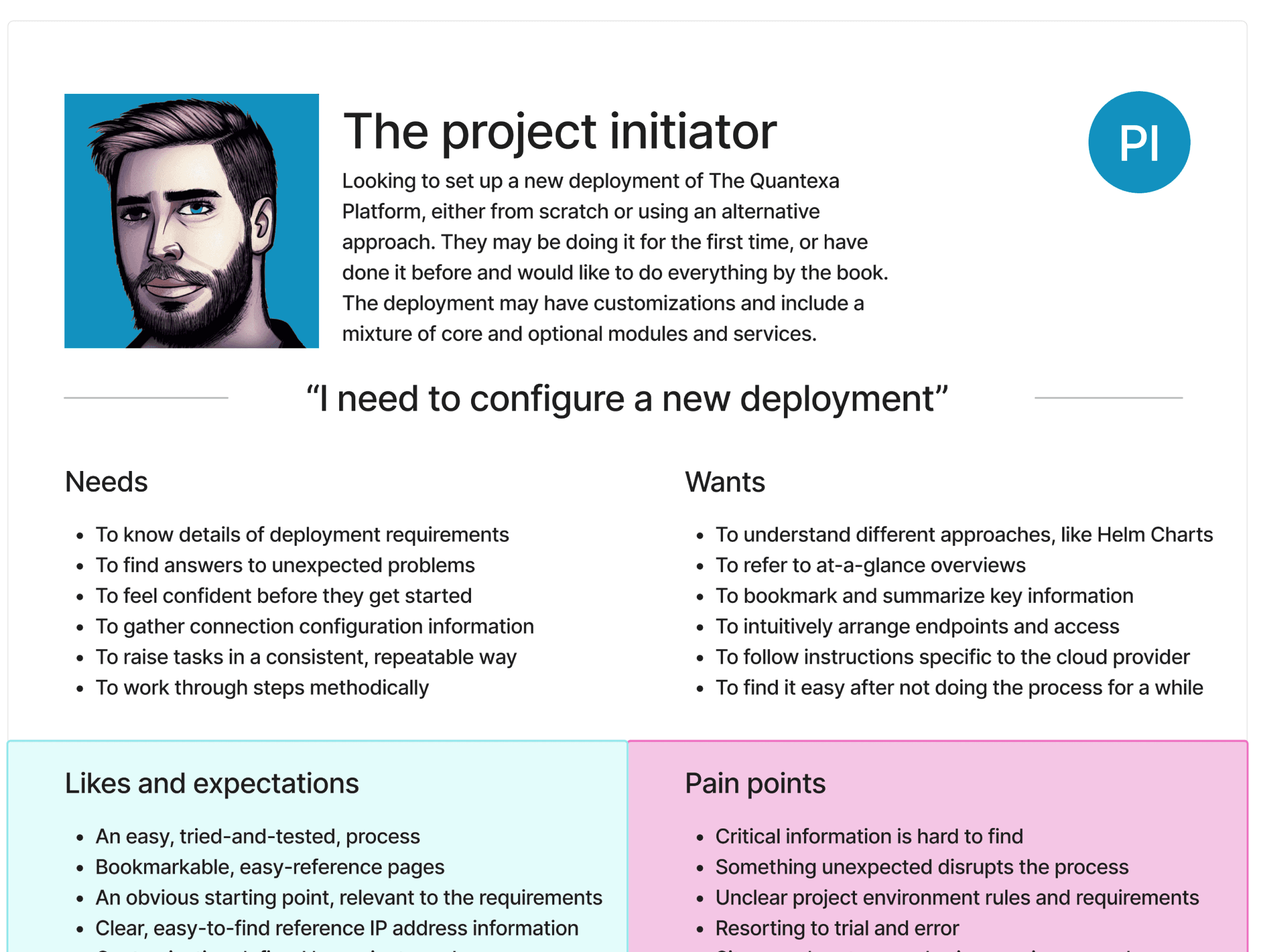
The project initiator user persona
Finding the right solutions
While Google Analytics provided a baseline of user behaviour, quantitative data alone could not give a significant insight into the diverse goals and technical perspective of our audience. We needed to understand more about their motivations to effectively adapt our content to meet their needs.
I analysed the core tasks users actually came to the site to complete and proposed a series of personas aligned to them, rather than taking a more traditional, role-based approach. By gathering qualitative insights from SMEs I had spent time building relationships with, I mapped these primary journeys into a series of comprehensive user personas detailing specific technical capabilities, needs, and pain points.
These personas became a crucial, shared reference point for the wider business. They allowed the technical writing team and cross-functional authors to align around a single vision, ensuring all future structural and content decisions directly solved real user problems.
Bringing content and systems together
User testing revealed poor search relevance and the absence of a dedicated results page, which both negatively affected user experience. Examining the search configuration showed a primitive index that lacked key page metadata, but manually updating thousands of unique pages wasn't a viable approach.
I shifted to an automated approach. Using Cline in VS Studio Code, I engineered a sophisticated AI metadata generator capable of consistently populating keywords and descriptions. By establishing a rigorous pytest workflow, I iterated the tool to a standard where the LLM-generated editorial content required no manual review, ensuring high accuracy and robust processing at scale.
I integrated this functionality directly into our GitHub CI/CD pipelines, orchestrating the functionality across three repositories. This created a completely self-managing, industry-leading system that automatically tests and maintains excellent search performance whenever content edits are made, fundamentally transforming site discoverability.
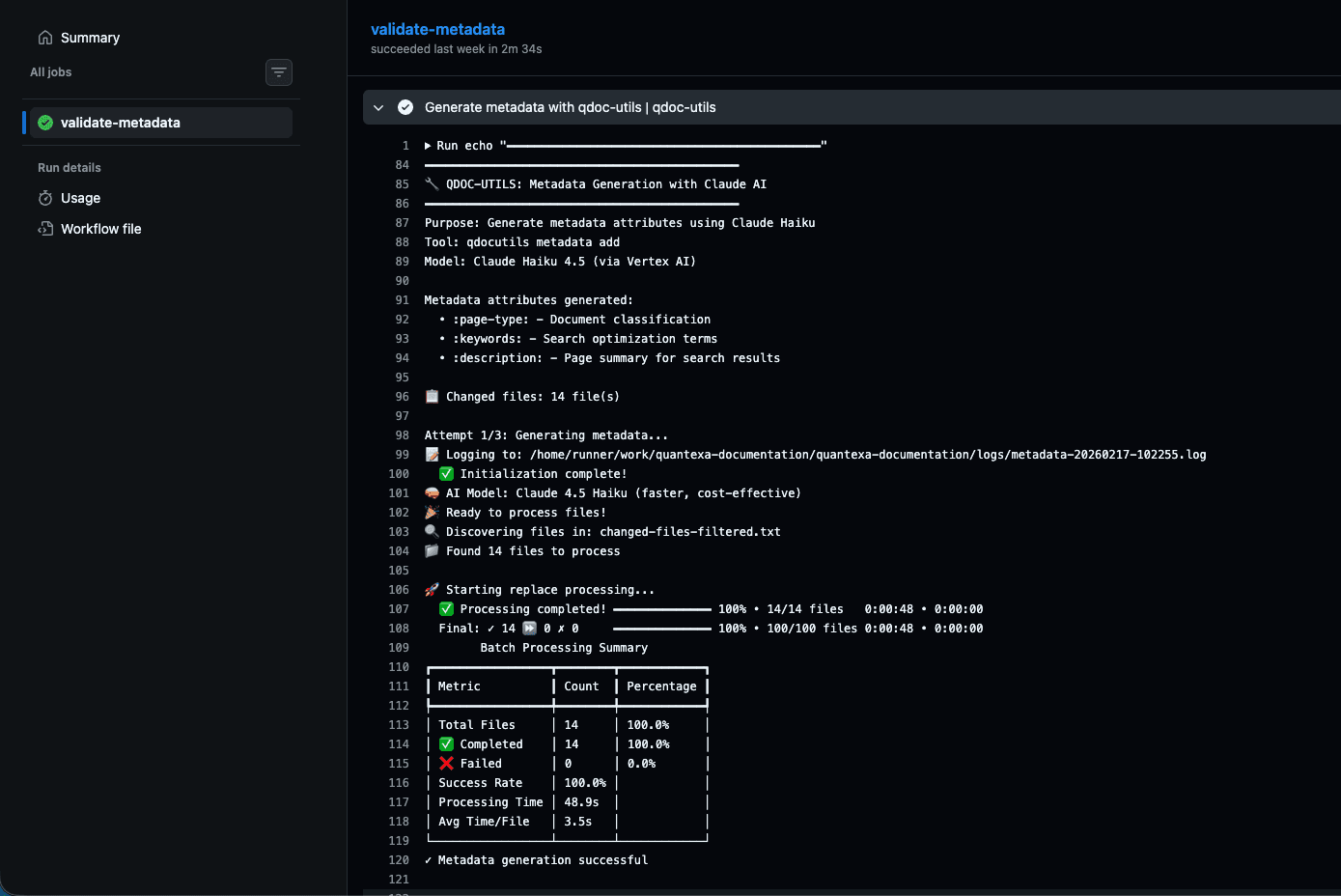
Making the technical approachable
Working with an extremely technical product makes it easy to get lost in the detail. While my journalistic training helps find clear answers that everyone can follow, this challenge required immersing myself completely in the complex underlying logic. I needed to gain a deep understanding of the system before I could step back and find the best way to tell that story.
Faced with the massive task of auditing the REST API documentation, I had to grasp both the engineering fundamentals and the exact specifics of how the business handled them. My goal was to reshape these technical details into an experience that set new editorial standards and created a look and feel fit for the future.
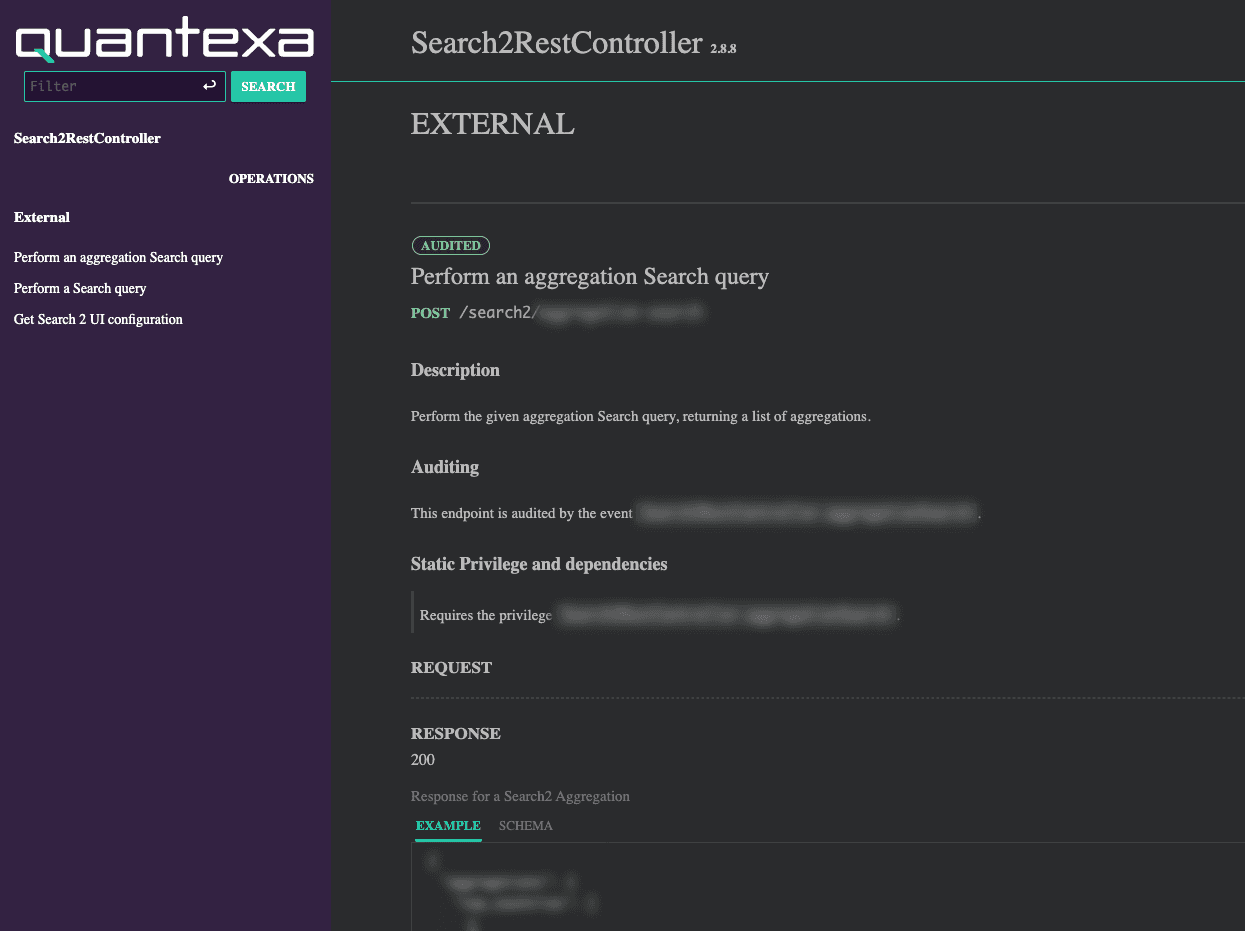
Legacy template (Rapidoc)
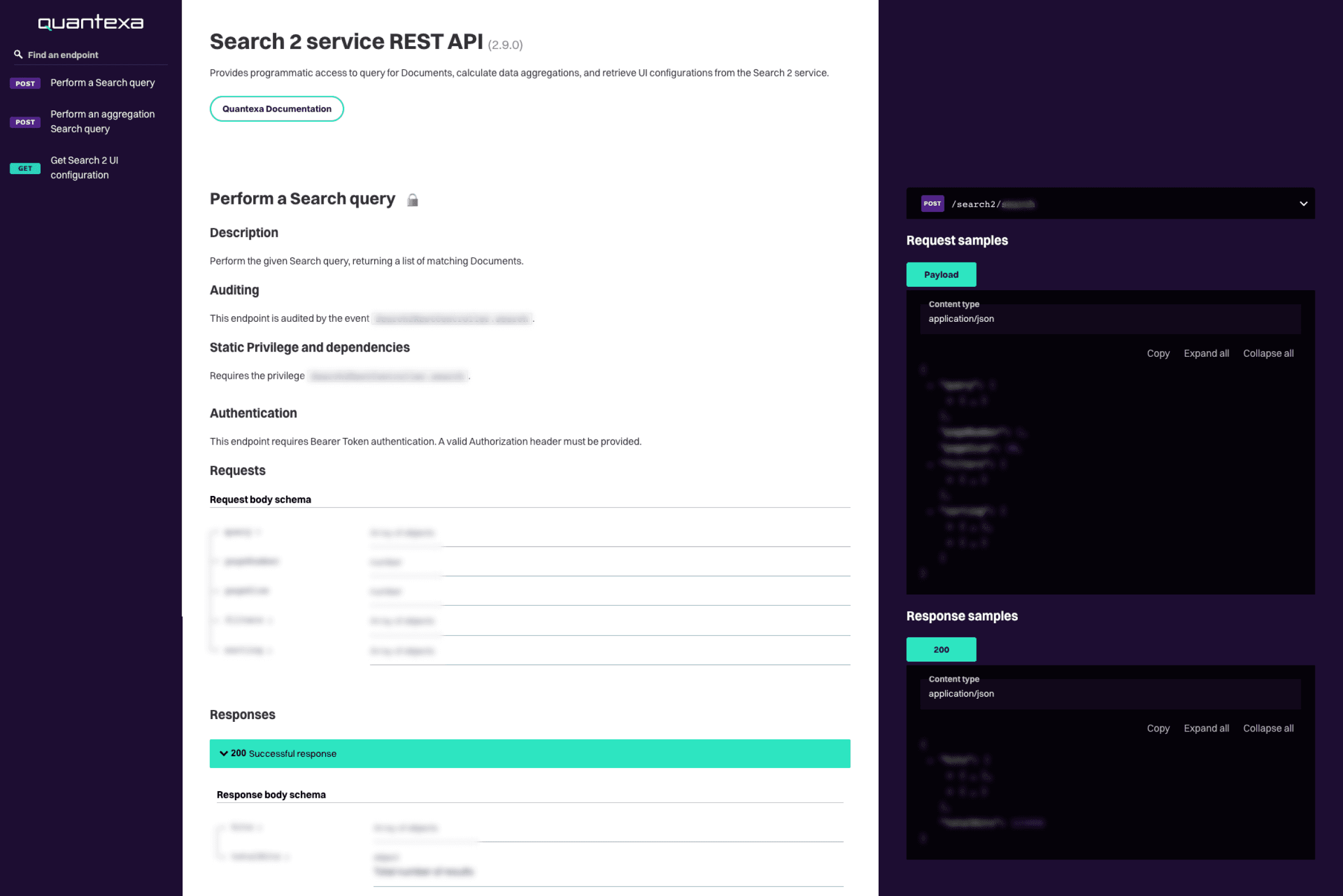
Modern developer experience (Redoc)
The existing documentation suffered from missing information, poor signposting, and an outdated design. To solve this structurally, I coded a local REST API documentation generator so I could rapidly iterate on the pages. Working alongside Claude Code, I completely transformed the underlying styling template into a modern, three-column layout.
Building this validation tool also provided a scalable base to divide and conquer the broader content quality issues. By delivering a clear audit paired with actionable steps, I secured vital buy-in from stakeholders and engineering teams to update pages across the board. Because I outlined the automated processes so clearly, stakeholders could invest their time confirming quality and accuracy rather than trying to make sense of unfamiliar code.
The user impact
From having no content design function at all in a startup of 300 staff, I evolved my department into a fully developed, principled, and integrated design culture for a scaleup of over 900 people, achieving both unicorn and centaur status in only five years. The scale and complexity of the role constantly grew, and I kept pace by deepening my knowledge of the product, the business, and crucially, the users themselves.
“I created a culture that goes much further than just the words on a screen.”
Workflows and AI integration pushed our boundaries even further. Delivering these elaborate projects with automated solutions avoided thousands of hours of manual processes, saving the equivalent of 17 months for metadata creation alone. I took these proofs of concept to live environments, fundamentally transforming hundreds of REST API endpoints in just a few short months.
By building intelligent systems on a strong foundation of content design principles, I consistently met user expectations and created a culture that goes much further than just the words on a screen. I design the content, and I build the systems that deliver it.