John Lewis Partnership
Forging journalistic foundations
Year
2009-2018
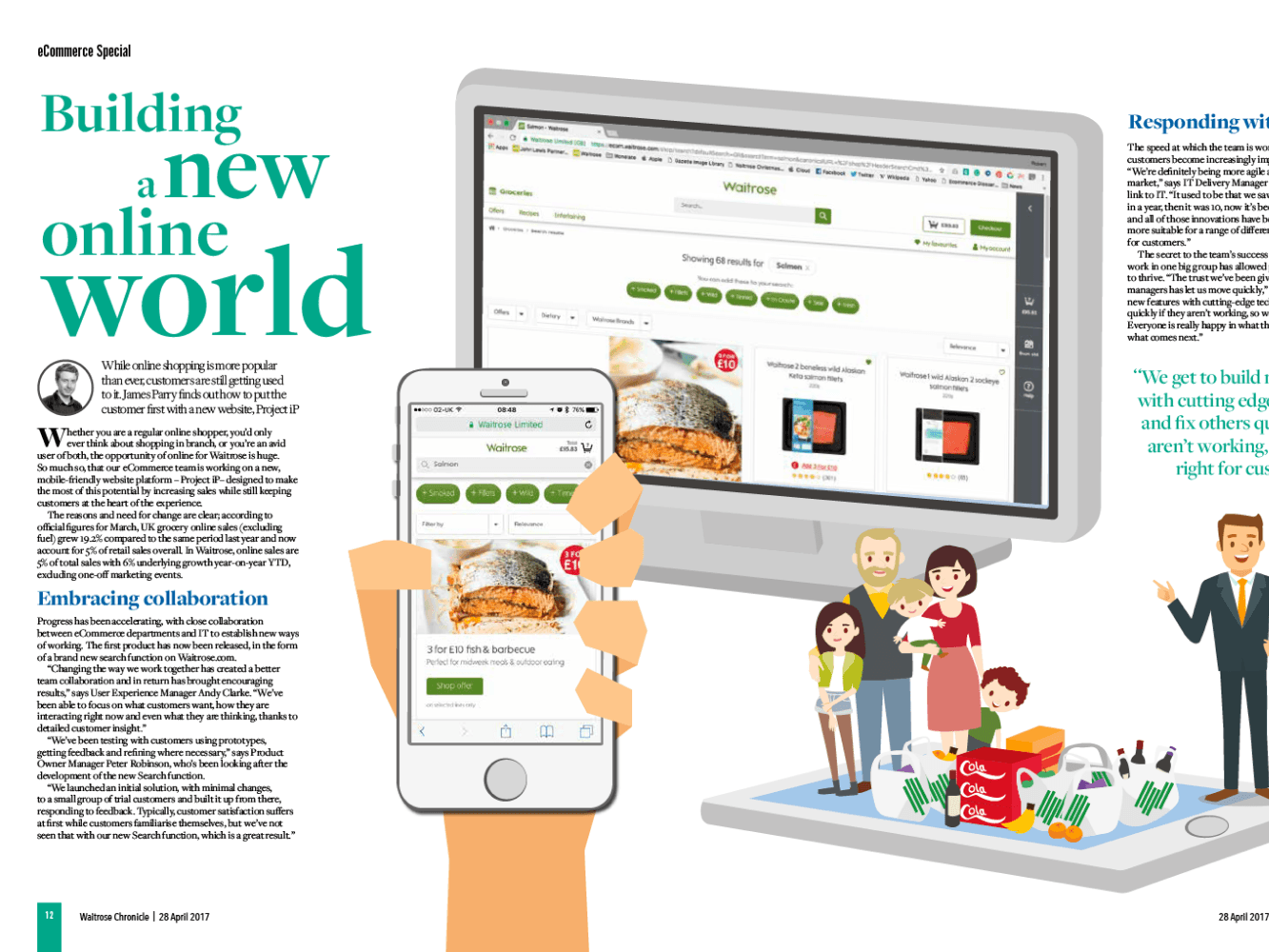
After finishing university, my first job was at the department store chain and historical pillar of British retail, John Lewis. I chose a trusted brand to start my career during a volatile time in the market, not realising it had such a rich internal communication and engagement culture. It proved to be the perfect place to put my fresh journalism skills into practice.
My various roles involved producing weekly magazines, known as The Chronicle and The Gazette, for rapidly scaling audiences across the business. I began by writing for 750 staff at John Lewis High Wycombe, before expanding to 55,000 staff at Waitrose, and finally producing content for the entire Partnership of both brands, reaching 90,000 staff, known internally as Partners.
Because my early roles involved working directly on the shop floor, I gained a profound understanding of the audience's experience by being a legitimate part of it. I eventually channelled this empathy into my editorial, design, and multimedia work, instilling my content with an authenticity that helped keep even the most mundane corporate updates highly engaging.
Building foundational skills
After studying journalism at university, I was incredibly enthusiastic to test myself in my first professional role, and John Lewis offered a huge variety of responsibilities. The primary challenge was producing and delivering a printed magazine each week, meaning every task centred around a strict weekly deadline. While there was plenty of writing and editing, this environment also provided a platform for many professional firsts, allowing me to develop practical skills in photography, video editing, and desktop graphic design.
“I learned the true value of working alongside professionals with diverse strengths and expertise, as well as the crucial importance of emotional intelligence.”
As I moved into more senior positions, I transitioned from being a solo content creator to a collaborative team player. Moving to Waitrose, where I spent the majority of my time, I took on the responsibility of establishing the online presence for the magazine. I experimented with using social media responsibly in a corporate setting and created video series to directly support the printed efforts of the wider team.
I also took on my first line management responsibilities. This experience taught me an immense amount about how people operate and how to adapt to the needs of my colleagues. I learned the true value of working alongside professionals with diverse strengths and expertise, as well as the crucial importance of emotional intelligence when tailoring my leadership style to both the task at hand and the team executing it.
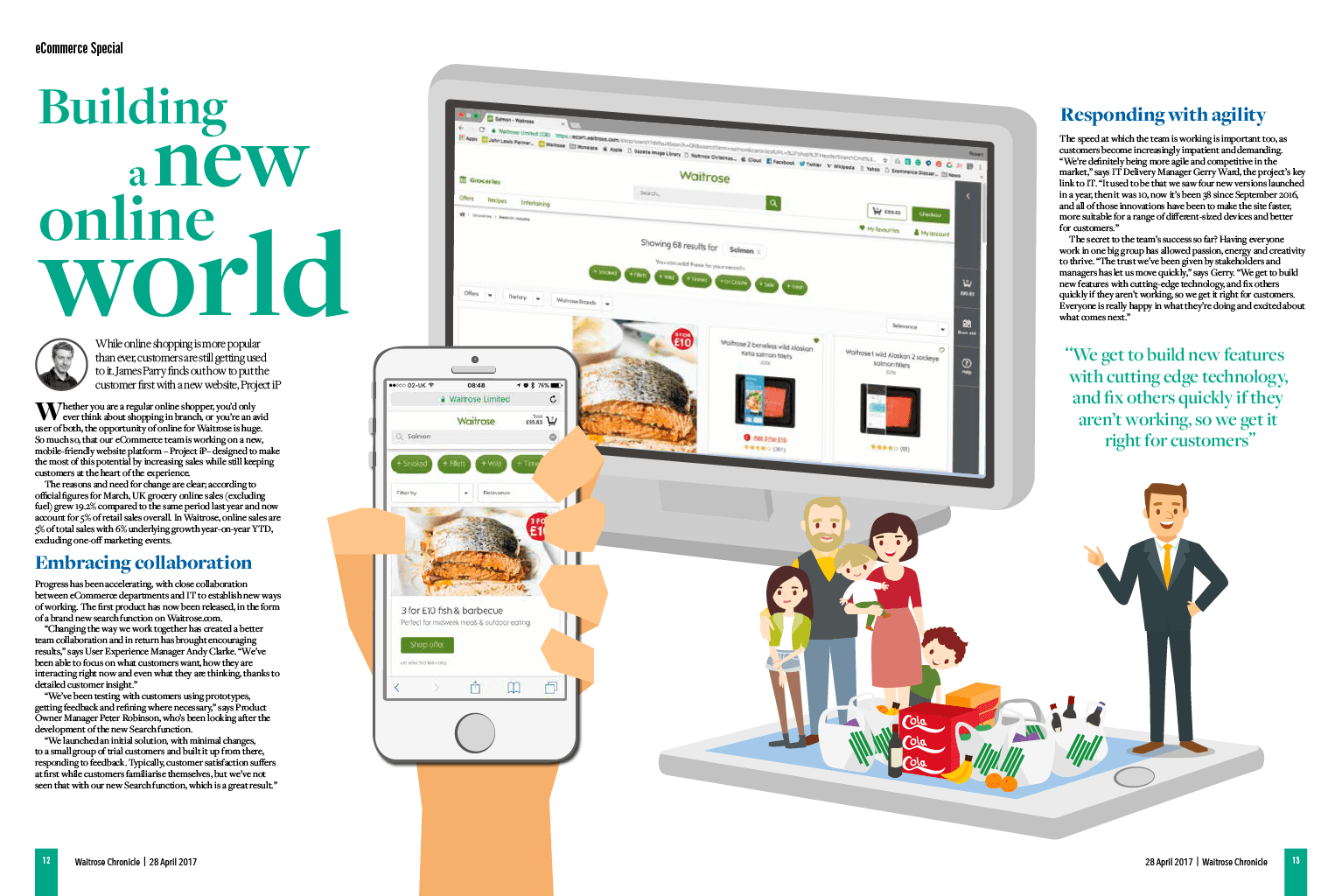
A spread from a special issue of the Waitrose Chronicle that I led about eCommerce and online transformation
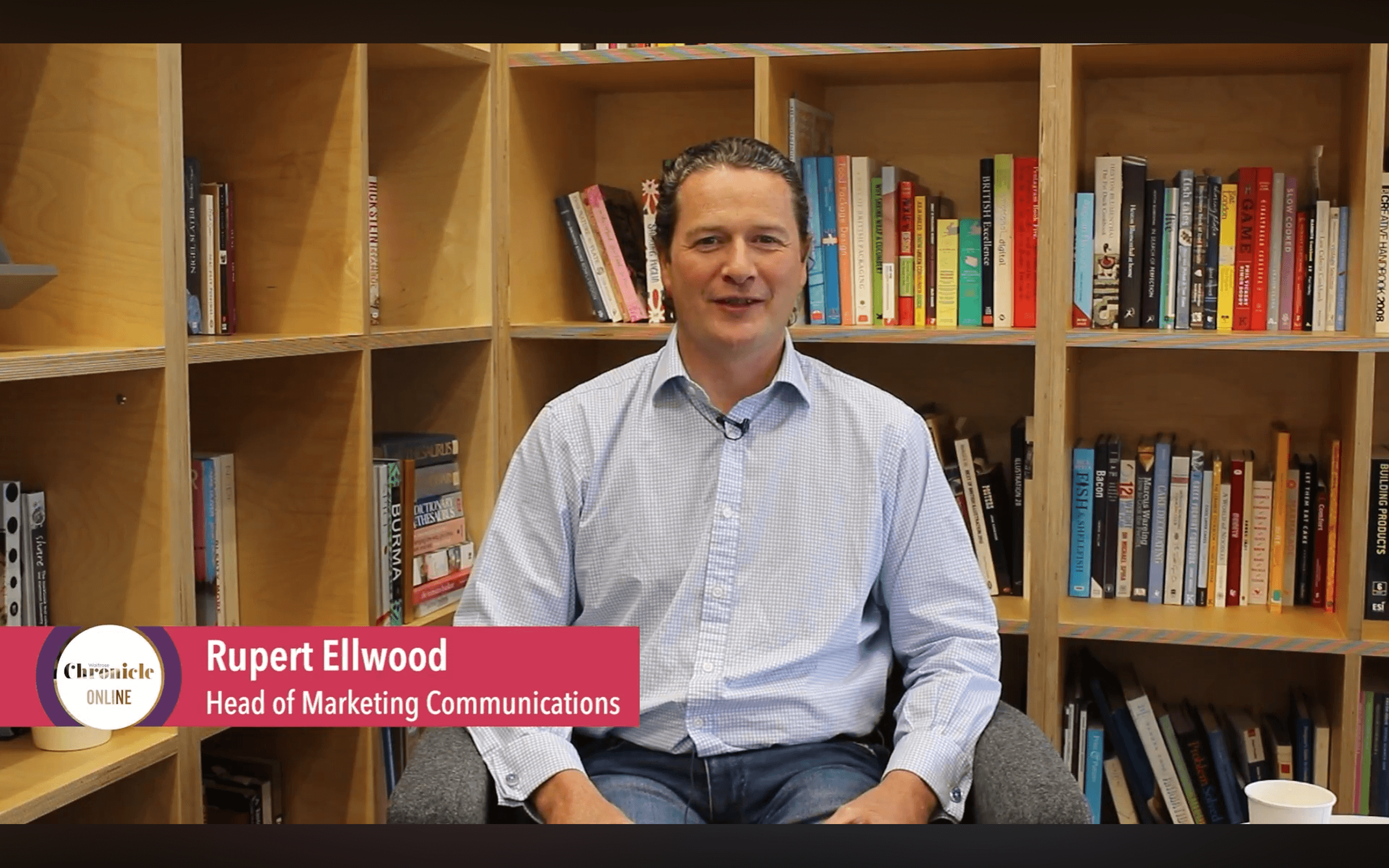
Interviewing board members like Rupert was a common occurrence
Supporting democratic vitality
The move to Waitrose opened up an unprecedented level of scale for my career. It forced me to think deeply about the importance of local news and features, alongside regional variations, while taking on the challenge of bringing a hugely varied workforce together into a single touchpoint with The Waitrose Chronicle.
A major part of the Partnership is its employee ownership model, which manifests most clearly in internal communications through the coverage of democratic vitality events, known as councils. Covering these events highlighted how advocacy for a brand allows staff to get much more out of what they do, while also acting as a massive benefit for the business. This ethos is something I continue to support and seek out in all the companies I work for today.
Witnessing the importance of staff opinion and the impact of influence on corporate decisions directly links to the immense value I place on user perspectives and insights to this day. This era also profoundly shaped many of my core working values, such as the crucial importance of a healthy work/life balance.
Delivering bad news
While it is always rewarding to share good news stories, the reality of the retail sector is that there is no shortage of difficult news to navigate. Communicating branch closures, restructuring, and the launch of change programmes all required significant care and consideration. This also meant tackling one of the most important learning curves in any career: stakeholder management.
“The audience is always asking, 'What does this mean for me?'”
The vital importance of sensitivity was highlighted in all these cases. Describing corporate changes as they happen in a matter-of-fact way can often ignore the reality that these decisions affect real people. The audience is always asking, "What does this mean for me?" Even recurring stories that would usually be a cause for celebration, such as the annual bonus, do not always play out as people expect and can have a massive impact on the lives of individuals.
Authenticity and understanding are key to earning the trust of the audience in these situations. Even as the scale increases and you find yourself writing for the entire company, protecting that human element is crucial to ensuring your message is trusted. Mastering this delicate balancing act with corporate messaging is a skill that remains absolutely vital to my work today.
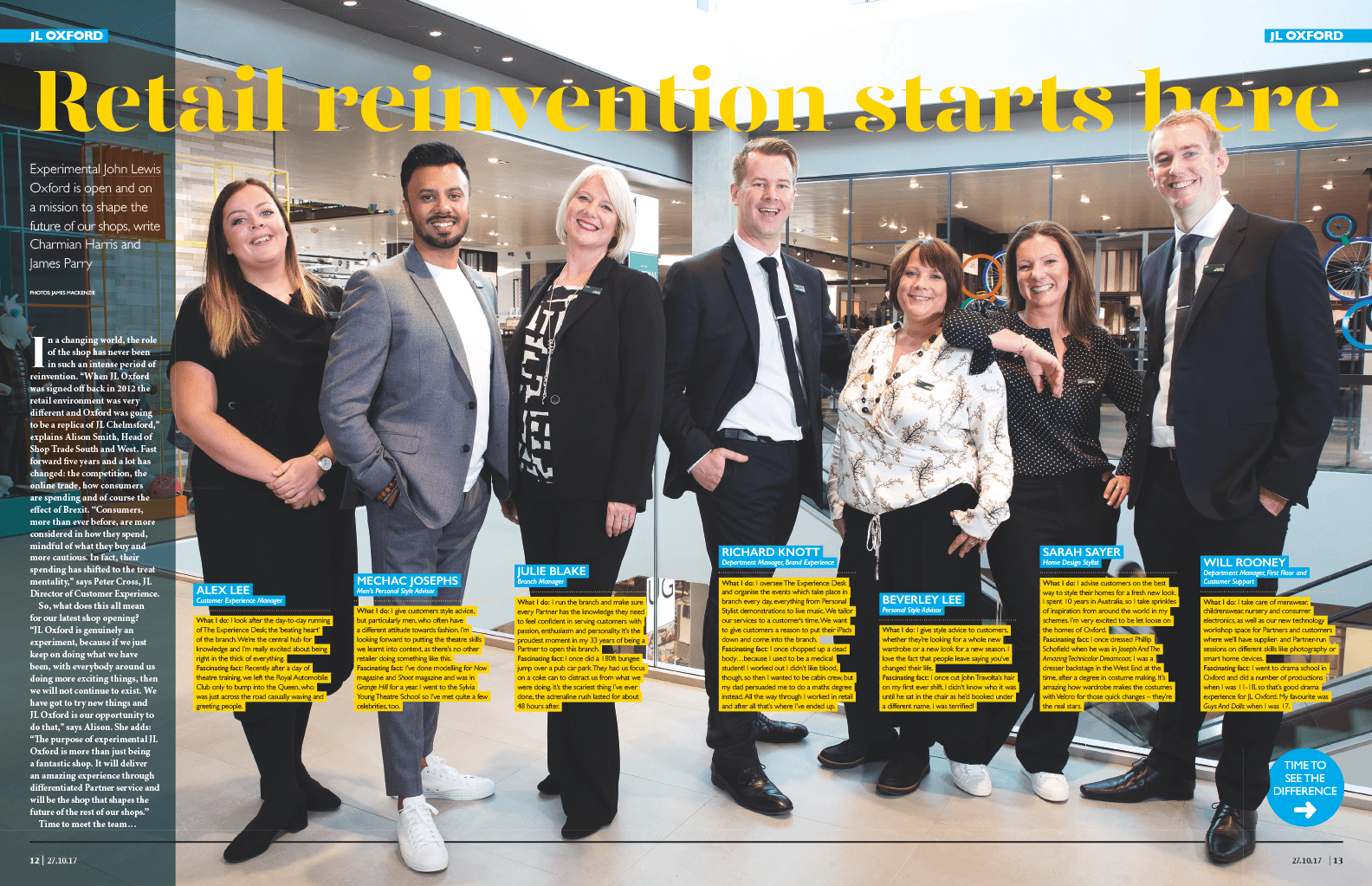
The user impact
I am incredibly proud of the work I did at the Partnership. Having come directly from the shop floor myself, I felt as close to being an authentic audience member as in any role in my career. The impact of this era was as much on my own development as it was on the audience. I am deeply grateful for the people who supported my earliest successful experiments, such as recording a 60-second update video to act as an online signpost for the printed edition, or conducting high-profile interviews with board members and chief executives.
“I'll always be grateful for what this foundation taught me about the power of words and the lasting impact they can have.”
Talking directly to people allowed me to put theory into practice. It deepened my understanding of how to ask the right questions and even how to use silence to delve further into a difficult topic. It also gave me the opportunity to witness the sheer power of opinion in real-time, as passionate Partners took the microphone at live events to honestly share their perspectives on what it truly felt like to work there.
Putting the audience at the centre of the experience is the absolute foundation of content design. Those nine years solidified that appreciation in a way that I could continually build upon in future roles. I have taken the vital lessons from those experiences to drive my work in crafting content and building the technical systems that deliver it today. I'll always be grateful for what this foundation taught me about the power of words and the lasting impact they can have.